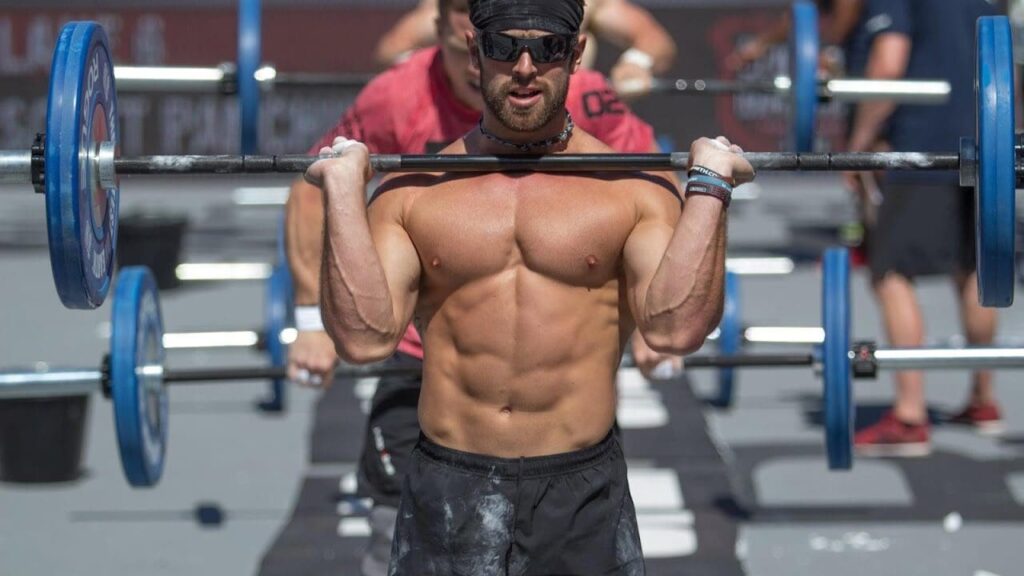
Add these Underrated Barbell Exercises into your training.
Barbells are a staple of strength training, yet most athletes default to the same movements: squats, bench press, and deadlifts.
While these lifts have undeniable value, they are not the only tools for building real-world, functional strength. Functional strength means the ability to apply force effectively across planes of motion, under dynamic conditions, and in ways that carry over to sport, work, and life.
This article explores five underutilized barbell exercises that are both biomechanically efficient and scientifically validated for improving performance, injury resilience, and overall strength. Each section details how the exercise works, its functional benefits, and the evidence supporting its inclusion in training.
1. Underrated Barbell Exercises: Barbell Overhead Carry
Why It Matters
The barbell overhead carry challenges the entire kinetic chain. Unlike a dumbbell or kettlebell variation, the barbell creates a wider base of instability, forcing the shoulders, core, and hips to coordinate under significant load.
This mirrors real-world tasks requiring overhead stability, such as lifting and moving heavy objects.
Biomechanical Demands
- Scapular stabilizers (trapezius, serratus anterior, rhomboids) maintain upward rotation and retraction.
- Spinal erectors and abdominal wall resist extension and lateral flexion.
- Lower body musculature provides gait stability under load.
Evidence
Studies on loaded carries demonstrate improvements in trunk stiffness, shoulder stability, and gait mechanics (McGill, 2016). Overhead variations amplify neuromuscular demands, enhancing scapular control and reducing shoulder injury risk in athletes (Saeterbakken & Fimland, 2013).
2. Underrated Barbell Exercises: Barbell Zercher Squat
Why It Matters
The Zercher squat positions the barbell in the crook of the elbows, dramatically shifting the load forward compared to back or front squats. This forces greater core engagement and emphasizes hip and knee flexion mechanics relevant to lifting from the ground.
Biomechanical Demands
- Quadriceps dominate knee extension under deep flexion.
- Glutes and hamstrings extend the hip from a mechanically disadvantaged position.
- Rectus abdominis and obliques resist spinal flexion due to anterior load placement.
Evidence
Research comparing front- and back-loaded squats shows that anterior load placement increases trunk muscle activation and reduces spinal compression (Gullett et al., 2009). The Zercher squat, as an extreme anterior load, maximizes these benefits. It is particularly valuable for combat athletes and manual laborers where lifting loads close to the torso is common.
[wpcode id=”229888″]3. Underrated Barbell Exercises: Barbell Pendlay Row
Why It Matters
The Pendlay row differs from traditional bent-over rows by requiring a strict horizontal torso and resetting the barbell on the floor each rep. This ensures maximal concentric power output and eliminates momentum, building explosive pulling strength.
Biomechanical Demands
- Latissimus dorsi and rhomboids generate scapular retraction.
- Posterior deltoids and trapezius assist in shoulder extension.
- Erector spinae and hamstrings stabilize isometric hip hinge position.
Evidence
Horizontal pulling is essential for scapular health and shoulder performance (Andersen et al., 2014). Explosive rowing variations improve rate of force development in pulling movements, transferring to Olympic lifts and sports requiring upper body power (Comfort et al., 2011).
4. Underrated Barbell Exercises: Barbell Landmine Press
Why It Matters
Pressing a barbell in a landmine setup (anchored at one end) creates a unique arcing pressing path that blends vertical and horizontal vectors. This is shoulder-friendly and highly transferable to pushing movements in sport and daily tasks.

Biomechanical Demands
- Pectorals and anterior deltoid drive pressing force.
- Serratus anterior and obliques stabilize the ribcage and rotation.
- Hips and legs contribute through staggered stance, making the lift full-body.
Evidence
Research indicates landmine pressing reduces shoulder impingement risk compared to traditional overhead pressing by limiting end-range glenohumeral elevation (Walker et al., 2021). It has been recommended for athletes recovering from shoulder injuries while still needing to maintain pressing strength.
5. Underrated Barbell Exercises: Barbell Hip Thrust
Why It Matters
Though gaining popularity, the hip thrust is still underused compared to squats and deadlifts. It isolates hip extension strength in a way no other barbell lift does, directly targeting the gluteus maximus—essential for sprinting, jumping, and lifting.
Biomechanical Demands
- Gluteus maximus generates terminal hip extension.
- Hamstrings contribute synergistically, especially at mid-range.
- Abdominals resist hyperextension of the lumbar spine.
Evidence
Bret Contreras’ EMG-based studies demonstrated hip thrusts elicit greater glute activation than squats or deadlifts (Contreras et al., 2015). Furthermore, research shows hip thrust training improves sprint performance and change-of-direction ability, highlighting its functional relevance (Jarvis et al., 2019).
Programming Considerations
Integration Into Training
These lifts should not replace foundational barbell movements but rather complement them. They can be rotated in during accessory blocks or prioritized for athletes with specific functional deficits.
- Overhead carries: 3–4 sets of 20–40 meters.
- Zercher squats: 3–5 sets of 3–8 reps.
- Pendlay rows: 4–6 sets of 4–6 explosive reps.
- Landmine press: 3–4 sets of 8–12 reps per side.
- Hip thrusts: 4–5 sets of 6–12 reps.
Progressive Overload
As with all barbell work, progressive overload applies. However, because several of these exercises involve unique loading patterns (e.g., anterior load, unilateral stance, isometric stabilization), load increases should be gradual and technique-focused.
Conclusion
Functional strength requires more than the “big three” lifts. By incorporating barbell exercises that challenge stability, anterior load management, horizontal pulling, hybrid pressing, and hip extension, athletes can build resilience and transferable performance. The five underrated movements detailed here are supported by biomechanical evidence and scientific literature, making them indispensable additions to any serious training program.
Key Takeaways
| Exercise | Functional Benefit | Key Muscles Targeted | Evidence-Based Advantage |
|---|---|---|---|
| Barbell Overhead Carry | Enhances full-body stability under load | Shoulders, core, hips | Improves scapular control and trunk stiffness |
| Barbell Zercher Squat | Builds anterior load strength for lifting tasks | Quads, glutes, core | Reduces spinal compression vs back squat |
| Barbell Pendlay Row | Trains explosive horizontal pulling | Lats, rhomboids, erectors | Improves scapular health and pulling power |
| Barbell Landmine Press | Shoulder-friendly pressing with rotation | Pecs, delts, serratus, obliques | Safer alternative for overhead pressing |
| Barbell Hip Thrust | Maximizes hip extension strength | Glutes, hamstrings, abdominals | Improves sprint and jump performance |
References
- Andersen, V., Fimland, M.S., Kolnes, M.K., & Saeterbakken, A.H. (2014). Electromyographic comparison of barbell deadlift, hex bar deadlift and hip thrust exercises: A cross-sectional study. Journal of Strength and Conditioning Research, 28(12), 3336–3345.
- Comfort, P., McMahon, J.J., & Fletcher, C. (2011). The effect of a six-week strength and conditioning program on rate of force development in rugby players. Journal of Strength and Conditioning Research, 25(4), 969–973.
- Contreras, B., Vigotsky, A., Schoenfeld, B.J., Beardsley, C., & Cronin, J. (2015). A comparison of gluteus maximus, biceps femoris, and vastus lateralis EMG amplitude between the barbell, band, and American hip thrust variations. Journal of Applied Biomechanics, 31(6), 452–458.
- Gullett, J.C., Tillman, M.D., Gutierrez, G.M., & Chow, J.W. (2009). A biomechanical comparison of back and front squats in healthy trained individuals. Journal of Strength and Conditioning Research, 23(1), 284–292.
- Jarvis, P., Turner, A.N., & Read, P. (2019). The acute effects of heavy barbell hip thrusts on sprint performance in rugby union players. Journal of Strength and Conditioning Research, 33(6), 1490–1496.
- McGill, S. (2016). Ultimate Back Fitness and Performance. Backfitpro Inc.
- Saeterbakken, A.H., & Fimland, M.S. (2013). Effects of body position and loading modality on muscle activity and strength in shoulder presses. Journal of Strength and Conditioning Research, 27(7), 1824–1831.
- Walker, S., Davis, L., & Herrington, L. (2021). Landmine press: A biomechanical and clinical perspective. Strength and Conditioning Journal, 43(3), 89–97.