In the realm of fitness and bodybuilding, the pursuit of sculpted physiques and peak performance knows no bounds.
As enthusiasts and athletes alike strive for excellence, there’s much to be gleaned from the training methodologies of those who have ascended to legendary status. This article serves as a comprehensive exploration of the unique training techniques employed by some of the most iconic figures in bodybuilding history.
Learning from the training methods of legendary bodybuilders offers a wealth of insight and inspiration for individuals seeking to enhance their own workouts. These athletes didn’t just build muscle; they crafted their physiques with precision, dedication, and innovation.
By studying their approaches to training, we can uncover valuable strategies for optimizing muscle growth, improving strength, and achieving our fitness goals.
Throughout this article, we’ll delve into the training techniques of three legendary bodybuilders who have left an indelible mark on the sport:
- Arnold Schwarzenegger: Renowned for his unparalleled combination of size, symmetry, and charisma, Schwarzenegger’s training methods epitomized intensity and volume.
- Ronnie Coleman: A titan of strength and mass, Coleman’s relentless pursuit of heavy lifting and intensity techniques propelled him to eight Mr. Olympia titles.
- Dorian Yates: Known for his uncompromising intensity and groundbreaking high-intensity training (HIT) methods, Yates reshaped the landscape of modern bodybuilding with his six consecutive Mr. Olympia victories.
By exploring the training methodologies of these five legendary bodybuilders, we aim to uncover the secrets behind their success and empower readers to incorporate their unique techniques into their own fitness endeavors.
Arnold Schwarzenegger
Arnold Schwarzenegger, born on July 30, 1947, in Thal, Austria, is one of the most iconic and influential figures in the worlds of bodybuilding, acting, and politics. His journey to fame and success is as remarkable as his physical prowess.
Schwarzenegger began weight training at the age of 15, quickly demonstrating an exceptional aptitude for the sport. In 1965, at the age of 18, he won the title of Mr. Universe, becoming the youngest person ever to do so. Over the following years, Schwarzenegger dominated the bodybuilding scene, winning numerous titles, including five Mr. Universe titles and seven Mr. Olympia titles.
He revolutionized bodybuilding with his impressive muscularity, symmetry, and stage presence, setting new standards for the sport. Schwarzenegger’s success in bodybuilding catapulted him into international fame and laid the foundation for his subsequent endeavors.
Schwarzenegger transitioned into acting in the late 1960s and early 1970s, initially appearing in low-budget films. His breakthrough role came in the 1982 film “Conan the Barbarian,” where he portrayed the titular character, marking the beginning of his iconic career in Hollywood. Schwarzenegger became known for his roles in action-packed blockbusters such as “The Terminator” series, “Predator,” “Total Recall,” and “Terminator 2: Judgment Day.”
He established himself as one of the highest-paid and most recognizable actors in the world, earning the nickname “The Austrian Oak” and “The Governator” along the way.
In 2003, Schwarzenegger announced his candidacy for the Governor of California, running as a Republican candidate in the recall election. Despite his lack of prior political experience, Schwarzenegger won the election in a landslide and served as the Governor of California from 2003 to 2011. During his tenure, he focused on issues such as environmental sustainability, infrastructure development, and fiscal reform, leaving a mixed legacy as a politician.
Arnold Schwarzenegger’s impact extends far beyond bodybuilding, acting, and politics. He is a cultural icon and a symbol of the American Dream, having achieved success through sheer determination, hard work, and resilience.
He continues to be actively involved in various philanthropic endeavors, promoting fitness and environmental conservation through his Arnold Sports Festival and other initiatives. Schwarzenegger’s life story serves as an inspiration to millions around the world, demonstrating the power of ambition, discipline, and self-belief in overcoming obstacles and achieving greatness.
Arnold’s High-Volume Training
Arnold Schwarzenegger’s high volume training method was a cornerstone of his approach to bodybuilding, contributing significantly to his legendary physique and success on the competitive stage.
High volume training involves performing a large number of sets and repetitions for each muscle group during workouts, typically with moderate to high intensity and relatively short rest periods between sets.
Focus on Muscle Fatigue: Schwarzenegger believed in thoroughly exhausting the muscles to stimulate maximum growth. He aimed to achieve muscle fatigue by performing multiple sets and reps for each exercise, pushing his muscles to the point of failure or near failure.
Multiple Exercises per Muscle Group: Schwarzenegger incorporated a variety of exercises targeting each major muscle group in his workouts. For example, for chest, he might perform bench press, incline press, flyes, and dips in a single session, each with multiple sets and reps.
High Repetitions: Schwarzenegger often included higher repetition ranges in his training, typically in the range of 8-12 repetitions per set for most exercises. This rep range was believed to optimize muscle hypertrophy (growth) by targeting both fast-twitch and slow-twitch muscle fibers.
Moderate to High Intensity: While Schwarzenegger’s training involved high volume, he also maintained a moderate to high intensity level throughout his workouts. He lifted challenging weights that allowed him to reach muscle fatigue within the desired rep range.
Short Rest Periods: To keep the intensity high and maintain muscle pump, Schwarzenegger typically kept rest periods between sets relatively short, often around 60-90 seconds. This approach helped to maintain elevated heart rate and metabolic stress, contributing to muscle growth and conditioning.
Variation and Progression: Schwarzenegger emphasized the importance of variation and progression in his training. He constantly adjusted his workouts by changing exercises, rep ranges, and training splits to keep his muscles guessing and prevent adaptation.

Overall, Schwarzenegger’s high volume training method was characterized by its intensity, variety, and focus on muscle fatigue. By incorporating these principles into his workouts, he was able to sculpt his physique to perfection and achieve unparalleled success in the world of bodybuilding.
Supersets and Giant Sets
Supersets and giant sets are advanced training techniques used in bodybuilding and strength training to increase intensity, efficiency, and muscle stimulation by performing multiple exercises consecutively with minimal rest. Here’s a definition of each:
Supersets:
A superset involves performing two exercises back-to-back with no rest in between. These exercises can target the same muscle group (agonist superset) or opposing muscle groups (antagonist superset).
- Agonist Superset: In this type of superset, both exercises target the same muscle group. For example, performing dumbbell bicep curls immediately followed by hammer curls.
- Antagonist Superset: Here, the two exercises target opposing muscle groups. For instance, performing bench press followed by bent-over rows, targeting the chest and back, respectively.
Arnold frequently incorporated agonist supersets into his workouts to exhaust specific muscle groups and enhance muscle definition. For example, he might perform a superset of barbell curls followed immediately by preacher curls to target the biceps from different angles.
He also utilized antagonist supersets to optimize time efficiency and increase training density. For instance, Arnold might pair chest flyes with bent-over rows to work the chest and back simultaneously, allowing one muscle group to rest while the other is active.
Giant Sets:
A giant set takes the concept of supersets to the next level by incorporating three or more exercises performed consecutively with no rest. These exercises often target the same muscle group from different angles or incorporate multiple muscle groups.
Giant sets can involve a series of exercises for a single muscle group (e.g., multiple chest exercises) or a circuit-style approach targeting different muscle groups in succession.
Arnold Schwarzenegger incorporated supersets and giant sets into his training regimen to maximize muscle pump, metabolic stress, and overall intensity. Here’s how he utilized these techniques:
Schwarzenegger was known for incorporating giant sets, particularly during his pre-contest training phases, to maximize muscle pump and conditioning. He would perform a series of exercises targeting the same muscle group with minimal rest in between.
For example, Arnold might perform a giant set for chest consisting of bench press, incline press, dumbbell flyes, and cable crossovers performed consecutively without rest. This approach helped to fully exhaust the chest muscles and create a deep muscle burn.
By incorporating supersets and giant sets into his training, Arnold Schwarzenegger was able to push his muscles to the limit, increase training intensity, and achieve the impressive muscle definition and fullness for which he became renowned in the bodybuilding world.
Training Tips from Arnold
Gradually Increase Volume: Arnold Schwarzenegger was known for his high-volume training style, gradually increasing the volume of his workouts over time to push his muscles to fatigue and stimulate growth.
Incorporate progressive overload into your training by gradually increasing the number of sets and reps for each exercise as your strength and endurance improve.
Focus on Muscle Symmetry: Arnold emphasized the importance of muscle symmetry and proportion in bodybuilding.
Pay close attention to muscle imbalances and weaknesses in your physique, and prioritize exercises that target those areas. Incorporate unilateral exercises and isolation movements to address any lagging muscle groups and promote overall symmetry and balance.
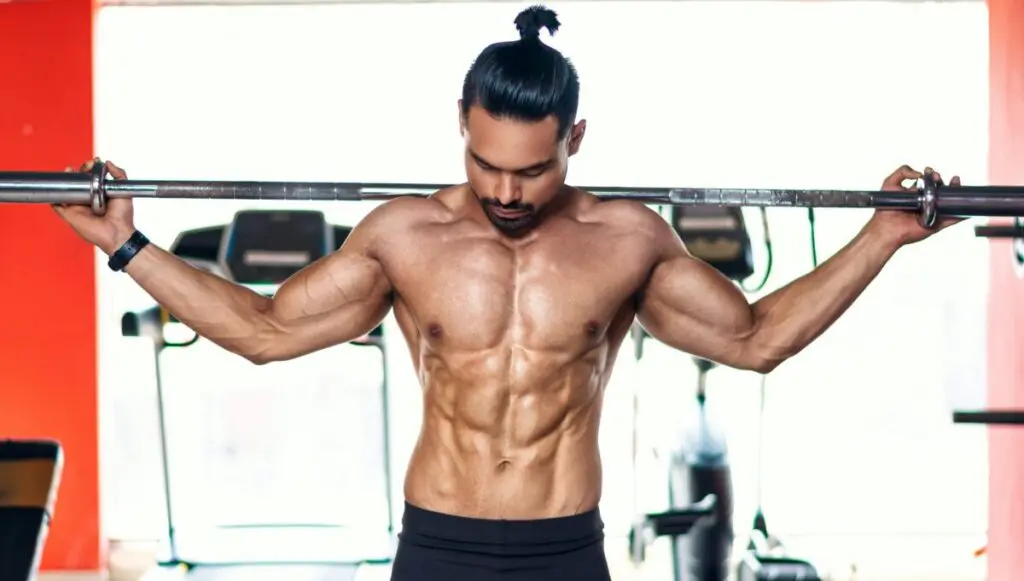
Mind-Muscle Connection: Arnold Schwarzenegger emphasized the mind-muscle connection during his workouts, focusing on feeling the muscles working with each repetition.
Concentrate on the quality of your movements and visualize the muscles contracting and elongating throughout each exercise. Develop a strong mind-muscle connection to maximize muscle engagement and stimulation for optimal results.
Ronnie Coleman “Lightweight Baby”
Ronnie Coleman, born on May 13, 1964, in Bastrop, Louisiana, USA, is widely regarded as one of the greatest bodybuilders of all time. His exceptional size, strength, and dominance on the competitive stage have earned him legendary status in the world of bodybuilding.
Before entering the world of bodybuilding, Coleman had a background in sports, particularly football. He played football at Grambling State University, where he earned a degree in accounting. Coleman’s interest in bodybuilding began when he was working as a police officer in Arlington, Texas.
Coleman had a background in powerlifting before transitioning to bodybuilding. His experience in powerlifting played a significant role in shaping his approach to training and provided him with a solid foundation of strength and muscle mass, which he then built upon when transitioning to bodybuilding.
He carried over the heavy lifting and intensity techniques from powerlifting into his bodybuilding workouts, allowing him to develop his physique to unprecedented levels of size and muscularity.
Throughout his bodybuilding career, Coleman’s powerlifting roots remained evident in his training style, as he continued to emphasize heavy lifting and compound movements to stimulate muscle growth and strength gains.
Coleman’s competitive bodybuilding career took off in the early 1990s when he began competing in amateur bodybuilding competitions. He turned professional in 1991 after winning the World Amateur Championships. Coleman’s breakthrough came in 1998 when he won his first Mr. Olympia title, dethroning reigning champion Flex Wheeler.
He went on to win the Mr. Olympia title a record-breaking eight times consecutively from 1998 to 2005, cementing his legacy as one of the most dominant champions in bodybuilding history. Coleman’s physique was characterized by his massive size, incredible muscle density, and striated muscle definition, earning him the nickname “The King” and “Big Ron.”
Coleman’s training style was characterized by his intense work ethic and heavy lifting. He was known for pushing his body to the limit in the gym, lifting massive weights with seemingly effortless ease. He followed a high-intensity training (HIT) approach, focusing on fewer sets to failure with heavy weights to stimulate maximum muscle growth. Coleman incorporated intensity techniques such as drop sets, forced reps, and partial reps into his training to push past plateaus and maximize muscle stimulation.
After retiring from competitive bodybuilding in 2007 due to injuries, Coleman remained active in the fitness industry as a motivational speaker, personal trainer, and supplement company owner. He continues to inspire millions of bodybuilders and fitness enthusiasts around the world with his incredible physique and unparalleled work ethic.
Despite facing numerous health challenges in recent years, including multiple surgeries and ongoing rehabilitation, Coleman remains a respected and beloved figure in the bodybuilding community, admired for his contributions to the sport and his indomitable spirit.
Ronnie’s Heavy Lifting Approach
Ronnie Coleman’s approach to heavy lifting was characterized by his sheer strength, intensity, and unwavering dedication to pushing his body to its limits in the gym.
As one of the most massive and powerful bodybuilders in history, Coleman’s training regimen revolved around lifting extremely heavy weights to stimulate maximum muscle growth and strength gains.
Focus on Compound Movements: Coleman prioritized compound exercises that targeted multiple muscle groups simultaneously. These compound movements allowed him to lift heavy weights and maximize muscle activation across large muscle groups. Examples of compound exercises include the squat, deadlift, bench press, and barbell rows.
Low Rep Ranges: Coleman typically trained in low repetition ranges, often performing sets of 6-8 reps or even fewer. This rep range allowed him to lift heavier weights while maintaining proper form and maximizing muscle recruitment. Low-rep, high-weight training is particularly effective for building strength and power.
Heavy Weight, Full Range of Motion: While lifting heavy weights was paramount in Coleman’s training, he also emphasized maintaining a full range of motion in each exercise. He would control the weight throughout the entire movement, ensuring that his muscles were fully engaged and activated from the start to the end of each repetition.
Takeaway Training Tips from Ronnie Coleman
Prioritize Heavy Compound Lifts: Ronnie Coleman’s emphasis on heavy compound lifts, such as squats, deadlifts, bench presses, and barbell rows, is a key takeaway for other lifters. These exercises target multiple muscle groups simultaneously and allow for the lifting of heavy weights, which is essential for building strength and muscle mass. Incorporating compound lifts into your training routine can help you develop a solid foundation of strength and stimulate overall muscle growth more effectively.
Focus on Progressive Overload: Coleman’s commitment to progressive overload is another valuable takeaway. Progressive overload involves gradually increasing the intensity or volume of your workouts over time to continually challenge your muscles and stimulate growth.
Whether it’s adding more weight to the bar, increasing the number of sets or reps, or reducing rest periods between sets, consistently pushing yourself to lift heavier weights and perform more challenging exercises is essential for making progress and achieving your fitness goals.
Train with Intensity and Determination: One of the defining characteristics of Ronnie Coleman’s training style is his unmatched intensity and determination in the gym. He approached each workout with a relentless drive to push his limits and give it his all, even when lifting heavy weights.
Adopting a similar mindset of focus, dedication, and determination in your own training can help you push through plateaus, overcome challenges, and achieve greater results. By staying committed to your goals and giving maximum effort in each workout, you can make significant strides towards improving your strength, muscle size, and overall fitness level.
Ronnie Coleman’s Most Used Exercises
Ronnie Coleman favored a variety of exercises, particularly compound movements, to build his exceptional size, strength, and muscularity. Here are some exercises that were staples in Ronnie Coleman’s training routine:
Barbell Squats
Coleman frequently incorporated barbell squats into his leg workouts. Squats are a compound movement that targets the quadriceps, hamstrings, glutes, and lower back, making them essential for building lower body strength and muscle mass.
Deadlifts
Deadlifts were another fundamental exercise in Coleman’s routine, targeting the posterior chain muscles including the hamstrings, glutes, lower back, and traps. This compound movement is known for its effectiveness in building overall strength and muscle mass.
Bench Press
The bench press was a staple in Coleman’s chest workouts. This compound exercise targets the chest, shoulders, and triceps, helping to develop upper body strength and muscle mass.
Barbell Rows
Coleman frequently performed barbell rows to target the muscles of the back, including the lats, rhomboids, and traps. This exercise helps to build a thick and strong back, essential for achieving a balanced and proportionate physique.
Dumbbell Shoulder Press
Coleman incorporated dumbbell shoulder presses to target the deltoid muscles of the shoulders. This exercise helps to develop shoulder strength and size, contributing to overall upper body development.
Dumbbell Lunges
Lunges with dumbbells were often included in Coleman’s leg workouts to further target the quadriceps, hamstrings, and glutes. Lunges also help improve balance and stability while providing an effective lower body workout.
Hammer Strength Machines
Coleman frequently utilized Hammer Strength machines for various exercises, including chest presses, rows, and shoulder presses. These machines provide a controlled range of motion and help isolate specific muscle groups for maximum stimulation and growth.
Dumbbell Bicep Curls
For arm development, Coleman favored dumbbell bicep curls. This exercise targets the biceps brachii and helps to build arm size and definition.
Tricep Pushdowns
Tricep pushdowns using a cable machine were common in Coleman’s arm workouts. This exercise isolates the triceps muscles and helps to build strength and size in the back of the arms.
Leg Press
Coleman often incorporated the leg press machine into his leg workouts to further target the quadriceps, hamstrings, and glutes while providing variation to traditional squatting movements.
Ronnie Coleman Quotes
“Yeah buddy! Ain’t nothin’ but a peanut!”
This quote became one of Coleman’s signature catchphrases and is often used to express determination, confidence, and perseverance in the face of challenges.
“Everybody wants to be a bodybuilder, but nobody wants to lift no heavy-ass weights.”
This quote highlights Coleman’s emphasis on hard work, dedication, and the importance of lifting heavy weights in bodybuilding and strength training.
“Light weight, baby!”
Similar to his “Ain’t nothin’ but a peanut” catchphrase, this quote reflects Coleman’s attitude of pushing through obstacles and overcoming challenges with determination and enthusiasm.
Dorian Yates
Dorian Yates, born on April 19, 1962, in Sutton Coldfield, England, is a former professional bodybuilder who rose to prominence in the 1990s.
Known as “The Shadow” for his elusive presence during competitions and his ability to dominate the stage, Yates is widely regarded as one of the most successful and influential bodybuilders in the history of the sport.
Before entering the world of bodybuilding, Yates had a background in martial arts, specifically boxing and judo. He initially pursued a career in professional boxing but transitioned to bodybuilding after a series of injuries forced him to reconsider his path.
Bodybuilding Career
Yates began competing in bodybuilding in the late 1980s and quickly made a name for himself with his impressive physique and intense training methods.
He won his first major title, the British Championships, in 1986, and went on to win the IFBB Mr. Olympia title six times consecutively from 1992 to 1997.
Yates revolutionized the sport of bodybuilding with his unprecedented size, density, and muscularity, setting a new standard for the modern bodybuilder.
His training philosophy, known as High-Intensity Training (HIT), emphasized short, intense workouts with heavy weights and minimal rest, which proved to be highly effective in stimulating muscle growth and achieving peak conditioning.
High-Intensity Training (HIT)
Dorian Yates’ training philosophy, High-Intensity Training (HIT), stands as a cornerstone of his approach to bodybuilding. Characterized by its focus on intensity, efficiency, and maximal muscle stimulation, HIT revolutionized the way bodybuilders approached their workouts. Yates’s implementation of HIT was not just a method but a philosophy that reshaped the landscape of modern bodybuilding.
HIT involves performing a limited number of sets to failure with heavy weights, emphasizing quality over quantity. Workouts are brief yet intense, typically lasting no more than an hour. The core principle of HIT is to push each muscle group to complete exhaustion, often surpassing the point of failure to stimulate maximal muscle growth. Yates believed in training with absolute intensity, pushing the limits of muscular endurance and mental fortitude with every repetition.
Central to Yates’s HIT philosophy was the concept of intensity techniques. These included forced reps, drop sets, and partial reps, all aimed at further challenging the muscles and promoting hypertrophy. By incorporating these intensity techniques, Yates was able to maximize muscle stimulation and achieve the remarkable muscle density and separation for which he became renowned.

Yates’s implementation of HIT was not just about lifting heavy weights; it was about training with purpose and precision. Each workout was meticulously planned, with a focus on targeting specific muscle groups and achieving optimal muscle fatigue. The intensity of Yates’s training regimen was matched only by his unwavering commitment to pushing himself beyond his limits in pursuit of excellence.
The success of Yates’s HIT approach was evident in his remarkable achievements on the competitive stage. His unparalleled size, density, and muscularity set a new standard for the modern bodybuilder, inspiring countless athletes to adopt his training methods. Even in retirement, Yates’s legacy lives on, as his training philosophy continues to influence and shape the practices of bodybuilders and fitness enthusiasts around the world.
Controlled Negatives (Eccentric Training)
Dorian Yates incorporated controlled negatives, also known as eccentric training, as a fundamental component of his High-Intensity Training (HIT) philosophy. Controlled negatives involve slowing down the lowering phase of an exercise to increase time under tension and maximize muscle stimulation during the eccentric (lengthening) phase of the movement.
Here’s how Dorian Yates utilized controlled negatives in his training:
Emphasis on Slow, Controlled Movements: During his workouts, Yates focused on maintaining strict form and performing each repetition with deliberate control. He emphasized the importance of controlling the weight during both the lifting (concentric) and lowering (eccentric) phases of each exercise.
Maximizing Time Under Tension: Yates understood the significance of time under tension in stimulating muscle growth. By slowing down the lowering phase of an exercise, he increased the duration of time that the muscles were under load, which is crucial for promoting muscle hypertrophy and strength gains.
Enhancing Muscle Damage and Adaptation: Eccentric training induces greater muscle damage compared to concentric contractions alone. By incorporating controlled negatives into his workouts, Yates effectively induced muscle microtrauma, triggering the body’s adaptive response to repair and strengthen the muscles, leading to muscle growth and development over time.
Integrating Intensity Techniques: Yates often combined controlled negatives with other intensity techniques, such as forced reps or drop sets, to further challenge his muscles and push them beyond their limits. For example, he might perform a set of barbell curls with a heavy weight, then use a spotter to assist with the concentric phase while focusing on controlling the eccentric phase to failure.
Preventing Momentum and Injury: By emphasizing controlled negatives, Yates minimized the use of momentum and momentum to lift the weight, ensuring that the muscles were doing the majority of the work throughout the entire range of motion. This approach not only maximized muscle activation but also reduced the risk of injury by promoting proper biomechanics and joint stability.
Overall, Dorian Yates’ incorporation of controlled negatives into his training regimen exemplifies his commitment to intensity, quality, and maximizing muscle stimulation. By emphasizing slow, controlled movements during the eccentric phase of exercises, Yates was able to effectively challenge his muscles, induce muscle hypertrophy, and achieve the impressive muscular development for which he became renowned.
Example Dorian Yates Workout
Dorian Yates’ training methodology, known as High-Intensity Training (HIT), focused on short, intense workouts with heavy weights and minimal rest. Here’s an example of a Dorian Yates-style back workout:
Exercise 1: Deadlifts
- Warm-up: 1 set of 10 reps with a light weight
- Working sets: 3 sets of 6-8 reps
- Choose a weight that allows you to reach failure within the target rep range
- Rest for 2-3 minutes between sets
Exercise 2: T-Bar Rows
- Warm-up: 1 set of 10 reps with a light weight
- Working sets: 2 sets of 8-10 reps
- Use a weight that brings you close to failure within the target rep range
- Rest for 1-2 minutes between sets
Exercise 3: Hammer Strength High Row Machine
- Working sets: 2 sets of 8-10 reps
- Choose a weight that allows you to reach failure within the target rep range
- Rest for 1-2 minutes between sets
Exercise 4: One-Arm Dumbbell Rows
- Working sets: 2 sets of 8-10 reps per arm
- Choose a weight that allows you to reach failure within the target rep range
- Rest for 1-2 minutes between sets
Exercise 5: Pull-Ups (or Lat Pulldowns)
- Working sets: 1 set to failure (aim for at least 8-10 reps)
- Use bodyweight or a weight that allows you to reach failure within the target rep range
- If unable to perform pull-ups, substitute with lat pulldowns using a weight that challenges you
Conclusion
In conclusion, the training methods and philosophies of Arnold Schwarzenegger, Ronnie Coleman, and Dorian Yates offer valuable insights and lessons that can inspire and inform individuals on their fitness journey.
As we conclude our exploration of the incredible training techniques from Arnold Schwarzenegger, Ronnie Coleman, and Dorian Yates, it’s essential to recap the main training principles associated with each legendary bodybuilder:
Arnold Schwarzenegger:
- High Volume Training: Schwarzenegger’s approach emphasized performing a large number of sets and repetitions for each muscle group to induce muscle fatigue and stimulate growth.
- Variety and Progression: He advocated for variation in exercises, rep ranges, and training splits to prevent adaptation and continually challenge the muscles.
- Focus on Muscle Symmetry: Arnold prioritized muscle symmetry and proportion, addressing muscle imbalances through unilateral exercises and isolation movements.
Ronnie Coleman:
- Heavy Lifting and Intensity: Coleman‘s training revolved around heavy lifting and high-intensity techniques, such as drop sets and forced reps, to maximize muscle stimulation and strength gains.
- Compound Movements: He favored compound exercises like squats, deadlifts, and bench presses to target multiple muscle groups simultaneously and build overall strength and mass.
Dorian Yates:
- High-Intensity Training (HIT): Yates’ philosophy centered on short, intense workouts with heavy weights and minimal rest, focusing on training to failure to stimulate maximal muscle growth.
- Intensity Techniques: He utilized intensity techniques such as drop sets, forced reps, and partial reps to push beyond limits and promote hypertrophy.
- Controlled Negatives: Incorporating controlled negatives into his training helped enhance muscle stimulation and promote muscle adaptation and growth.
By studying and incorporating elements of their training methodologies into their own workouts, individuals can gain valuable knowledge and strategies to optimize their training, maximize muscle growth, and achieve their fitness goals.
Whether it’s setting ambitious goals, prioritizing compound movements, emphasizing intensity, or focusing on controlled negatives, there are valuable lessons to be learned from these iconic figures in bodybuilding.
Ultimately, the key takeaway from Arnold, Ronnie, and Dorian is the importance of dedication, consistency, and unwavering commitment to excellence. By embracing their principles and applying them with determination and discipline, individuals can unlock their full potential, push past their limits, and embark on a transformative journey towards greater strength, muscle development, and overall fitness.
As Arnold famously said, “Strength does not come from winning. Your struggles develop your strengths. When you go through hardships and decide not to surrender, that is strength.”
Learn More
Unbelievably Effective Science-Backed Arm Exercises You’ve Never Seen Before
The Diet that Will Transform Your Body in 100 Days
What Happens to Your Body When You Try the Anti-Ageing Diet for 90 Days?