Strong, well-defined shoulders are not only a key component of an aesthetically pleasing physique but also essential for functional strength and overall fitness. The shoulders are involved in a wide array of movements, from lifting and pushing to throwing and striking.
Therefore, developing robust shoulders can enhance performance in both everyday activities and specialized sports. Additionally, since the shoulder is one of the most mobile joints in the body, strengthening it can help prevent injuries that might be caused by its extensive range of motion.
When selecting the most effective exercises to improve shoulder aesthetics and function, several criteria are considered. First, the exercise should target all three deltoid heads (anterior, lateral, and posterior) to promote balanced growth and symmetry. Second, it should safely engage these muscles without putting undue stress on the shoulder joints and ligaments.
Third, the exercise needs to be versatile enough to suit various fitness levels and be adaptable with different equipment to ensure accessibility for all enthusiasts. Finally, for someone looking to see results quickly, the chosen exercises should be known for their efficacy in muscle engagement and growth, thus providing both immediate satisfaction and long-term gains.
This article will delve into three specific exercises that meet these criteria, helping you develop broader, rounder, and more powerful shoulders faster than you might expect.
Each exercise has been chosen for its proven ability to enhance shoulder size and shape while ensuring joint health and overall shoulder integrity. Let’s explore these key movements that can revolutionize your shoulder training regime.
Exercise 1: Overhead Press
The overhead press is a fundamental strength training exercise known for its effectiveness in building upper body strength and mass. Here’s how to execute it properly:
- Starting Position: Stand with your feet shoulder-width apart. Grip the barbell with hands just wider than shoulder-width. Position the barbell at collarbone level with your elbows pointing forward.
- The Lift: Brace your core and press the barbell upwards in a straight line. Keep the bar close to your face without touching it. Extend your arms fully at the top, with your head slightly forward so that the barbell is directly over your head and your spine.
- Finishing the Movement: Lower the bar back to the starting position at your collarbone slowly and controlled, preparing for the next repetition.
Variations:
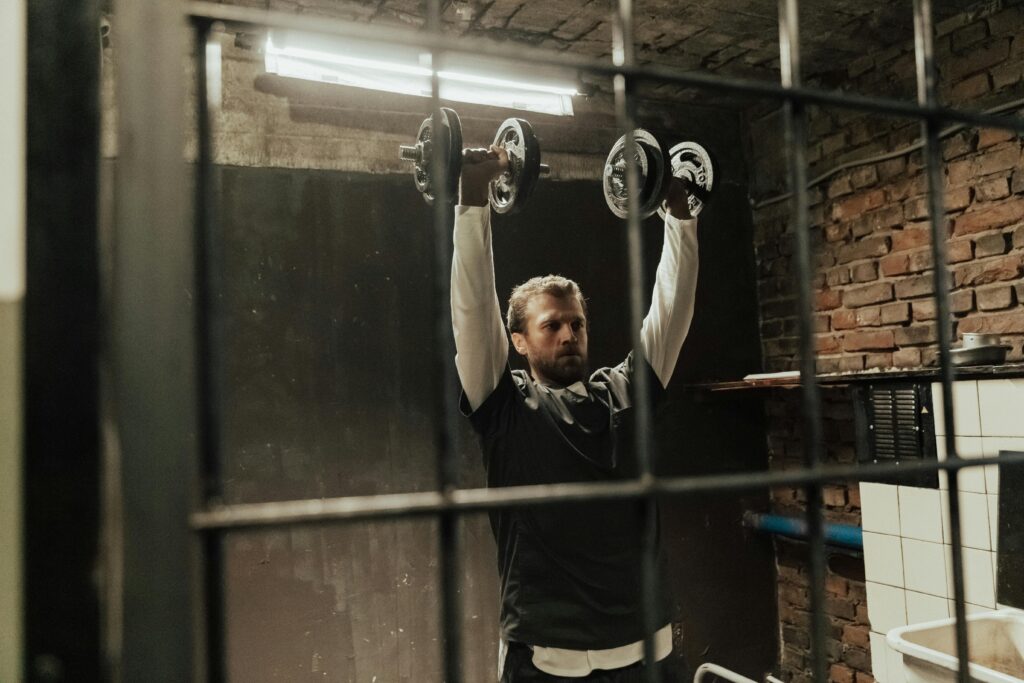
Dumbbell Overhead Press: This can be performed seated or standing. Each hand holds a dumbbell, which allows for a greater range of motion and can help identify and correct any imbalances in shoulder strength.
Seated Barbell Press: Often done within a squat rack or using a bench with a back support. This variation places less strain on the lower back and focuses the effort more directly on the shoulders.
Benefits
The overhead press is not only a shoulder builder; it engages multiple muscle groups. Primarily, it targets the entire deltoid area (anterior, medial, and posterior deltoids) for well-rounded development.
It also heavily involves the triceps for the arm extension and the upper traps, which help stabilize the movement. This exercise is excellent for building upper body strength and enhancing muscular coordination between different body segments.
Safety Tips
Warm Up Properly: Shoulder joints are particularly susceptible to injury due to their wide range of motion, so warming up with lighter weights or resistance bands is crucial.
Avoid Arching the Lower Back: Keep your core tight throughout the lift to prevent undue stress on your lower back. If you find your back arching, reduce the weight to maintain proper form.
Proper Grip Width: Using a grip that’s too wide can place unnecessary strain on the shoulder joints, while a grip that’s too narrow can stress the wrists. Adjust your grip to where it feels natural and keeps the bar balanced.
Common Mistakes to Avoid:
Pressing the barbell in front of the head rather than keeping it close to your body can lead to shoulder impingement and less effective muscle activation.
Locking the elbows out abruptly at the top of the lift can strain the elbow joints. Always aim for a smooth, controlled extension and descent.
By adhering to these guidelines, the overhead press can serve as a cornerstone exercise in any effective shoulder-building workout routine, helping to improve both the aesthetics and functionality of your shoulders.
Exercise 2: Lateral Raises
Lateral raises are a precision exercise targeting the middle section of the deltoids, essential for achieving broader shoulders. Here’s how to perform them correctly:
- Starting Position: Stand with your feet hip-width apart, holding a dumbbell in each hand with your palms facing inward towards your body.
- The Lift: Keeping a slight bend in your elbows, lift the dumbbells out to your sides until they are parallel with your shoulders, and your body forms a “T” shape. Ensure the movement is smooth and controlled.
- Finishing the Movement: Pause briefly at the top, then slowly lower the dumbbells back to your sides.
Variations:
Seated Lateral Raises: Performed by sitting on a bench with a back support. This variation helps minimize momentum used during the lift, placing more focus on the deltoid muscles.
Cable Lateral Raises: Using a cable machine can provide constant tension throughout the movement, which might be more effective for muscle growth. The setup involves pulling a handle attached to a low pulley.
Benefits
Lateral raises primarily target the middle deltoids, which are crucial for adding width to the shoulders. This visual enhancement is sought after for its aesthetic balance and the impression of a smaller waist.
Furthermore, lateral raises improve shoulder mobility and stability by strengthening the supporting muscles around the shoulder capsule.
Safety Tips
Controlled Movements: Avoid using heavy weights that lead to swinging the dumbbells up, as this can cause injury. Use lighter weights with which you can maintain control throughout the exercise.
Keep a Slight Bend in the Elbows: Locking the elbows can transfer the stress to the joints instead of the muscles. Keeping the elbows slightly bent will focus the tension on the middle deltoids.
Avoid Lifting Too High: Lifting the dumbbells above shoulder height can put excessive pressure on the shoulder joints. Always stop when your arms are parallel to the floor.
Adjustments for Existing Shoulder Issues:
Limit the Range of Motion: If you have shoulder problems, consider limiting the lift to just below shoulder height to reduce stress on the shoulder joint.
Use Resistance Bands: For those who find dumbbells too harsh, resistance bands offer a more joint-friendly alternative, providing resistance while allowing a bit more control and less impact on the shoulders.
By incorporating lateral raises into your routine, you can safely and effectively enhance the size and shape of your shoulders, improving both their appearance and functional capabilities.
Exercise 3: Face Pulls
Face pulls are an exceptional exercise targeting the rear deltoids and the upper back, crucial for balancing shoulder development and improving posture. Here’s how to perform them effectively:
Using a Cable Machine:
- Attach a rope to the high pulley of a cable machine.
- Grasp the rope with both hands, palms facing each other.
- Step back to create tension on the cable, stagger your stance for balance, and slightly bend your knees.
- Pull the rope towards your face, separating your hands as you do so, and aiming to pull the rope apart.
- Your elbows should be high and the rope ends moved towards your ears.
Using Resistance Bands:
- Secure the band at a high anchor point.
- Follow the same hand positioning and body mechanics as with the cable machine.
- Technique Tips to Maximize Effectiveness
- Focus on Elbow Position: Keep your elbows higher than your wrists throughout the movement. This ensures maximum engagement of the rear deltoids.
- Retract Your Scapula: As you pull the rope or band towards your face, consciously retract your scapulae (squeeze your shoulder blades together) to fully activate the upper back muscles.
- Controlled Tempo: Maintain a slow and controlled tempo, especially on the return phase to increase time under tension for the muscles.
Benefits
Emphasizes Rear Deltoids and Upper Back: Face pulls effectively target the often-neglected rear deltoids, which are vital for a balanced and symmetrical shoulder look. They also strengthen the muscles of the upper back, including the rhomboids and trapezius.
Improves Posture and Shoulder Health: Regularly performing face pulls can help reverse some of the common issues related to poor posture by strengthening the posterior shoulder muscles and upper back. This exercise also stabilizes the shoulder joints, which is crucial for injury prevention.
Safety Tips
Avoid Neck Strain: Ensure you’re not using your neck muscles to perform the pull. Focus on using your arms and upper back to do the work. If you feel strain in your neck, reduce the weight and reassess your form.
Proper Alignment: Keep your head and spine in neutral alignment throughout the exercise. Avoid jutting your head forward as you pull.
Modifications for Beginners or Those with Limited Equipment
Adjust Resistance: Beginners should start with light resistance to focus on technique before adding more weight.
Seated Face Pulls: For those who find standing pulls challenging or do not have access to a suitable high anchor point, seated face pulls can be an alternative. This can help maintain better form and reduce the risk of compensating with other muscles.
Incorporating face pulls into your workout routine can lead to significant improvements not just in your shoulder aesthetics but also in your overall upper body health and functionality.
Additional Tips for Faster Results
To achieve well-defined, strong shoulders faster, incorporating the right exercises is crucial, but so is the approach to your overall routine and nutrition. Here are some additional tips to help you get results more efficiently:
Importance of Consistency and Progressive Overload
Consistency is Key: Regularly performing your shoulder workouts is essential for muscle growth and development. Aim to work your shoulders at least twice a week to ensure adequate stimulation for growth.
Progressive Overload: To continually challenge your muscles and encourage growth, increase the intensity of your workouts over time. This can be done by adding more weight, increasing the number of repetitions, or incorporating more sets into your routine.
Recommendations for Frequency, Sets, and Repetitions
Frequency: As mentioned, a minimum of two shoulder-specific sessions per week can be effective. This frequency allows for adequate recovery while still promoting muscle growth.
Sets and Repetitions:
- For strength building, focus on fewer reps (4-6) with heavier weights.
- For muscle size (hypertrophy), aim for a moderate number of reps (8-12) with moderate weights.
- Always start with 2-3 sets per exercise and adjust based on your fitness level and goals.
Nutritional Tips to Support Muscle Growth and Recovery
- Protein Intake: Protein is crucial for muscle repair and growth. Aim to consume at least 1.6 to 2.2 grams of protein per kilogram of body weight daily. Good sources include lean meats, fish, eggs, dairy products, legumes, and protein supplements if necessary.
- Carbohydrates: Carbs help replenish glycogen stores that fuel your workouts. Include quality carbohydrates like whole grains, fruits, and vegetables in your diet.
- Healthy Fats: Don’t shy away from fats; they play a vital role in hormone production, including hormones like testosterone which are essential for muscle growth. Include sources of healthy fats like avocados, nuts, seeds, and olive oil.
- Hydration: Staying hydrated is essential for optimal performance in the gym and for recovery. Drink plenty of water throughout the day, and especially around your workouts.
- Timing of Nutrition: Eating a balanced meal or snack that includes protein and carbohydrates before and after your workouts can help enhance muscle recovery and energy levels. For example, a banana with a protein shake can be an excellent post-workout recovery snack.
By following these guidelines—staying consistent with your workouts, applying progressive overload, managing your workout frequency, sets, and reps, and supporting your efforts with the right nutrition—you can significantly enhance your shoulder development and see faster results.
Conclusion
In this article, we explored three key exercises designed to enhance the aesthetics and strength of your shoulders: the overhead press, lateral raises, and face pulls. Each exercise targets different aspects of shoulder development, ensuring a comprehensive approach to building this vital area.
Overhead Press: A powerful exercise for developing the anterior and overall deltoids, as well as the triceps and upper traps. It’s essential for anyone looking to increase shoulder strength and mass.
Lateral Raises: These focus specifically on the middle deltoids, crucial for achieving that sought-after broad-shouldered look. They also help improve shoulder mobility and stability.
Face Pulls: By targeting the rear deltoids and upper back, face pulls round out your shoulder development while also enhancing posture and reducing the risk of shoulder injuries.
Integrating these exercises into a balanced workout routine can not only fast-track your progress towards more defined and sculpted shoulders but also contribute to better posture and decreased injury risk.
To see the best results, remember to maintain consistency in your workouts, apply principles of progressive overload, and support your physical efforts with appropriate nutrition.
We encourage you to take these exercises and adapt them to fit your specific fitness goals and needs. Whether you’re a beginner or an experienced gym-goer, these movements can be adjusted in terms of intensity and complexity to match your current fitness level.
By doing so, you’ll ensure continuous progress and sustained interest in your workout regimen, paving the way for not just better-looking shoulders, but a stronger, more capable body overall.
Happy lifting!