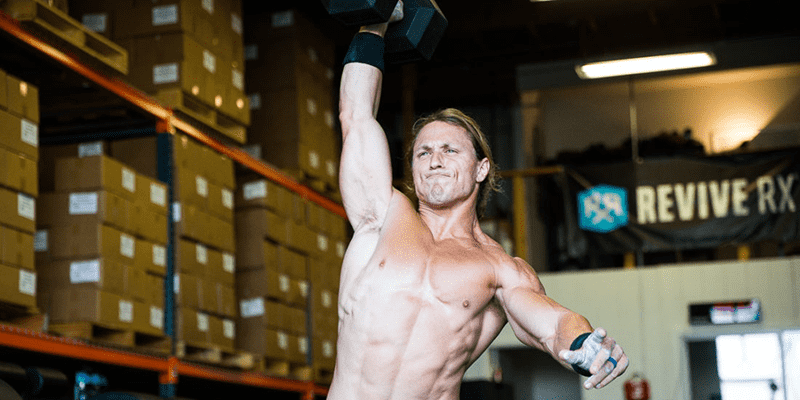
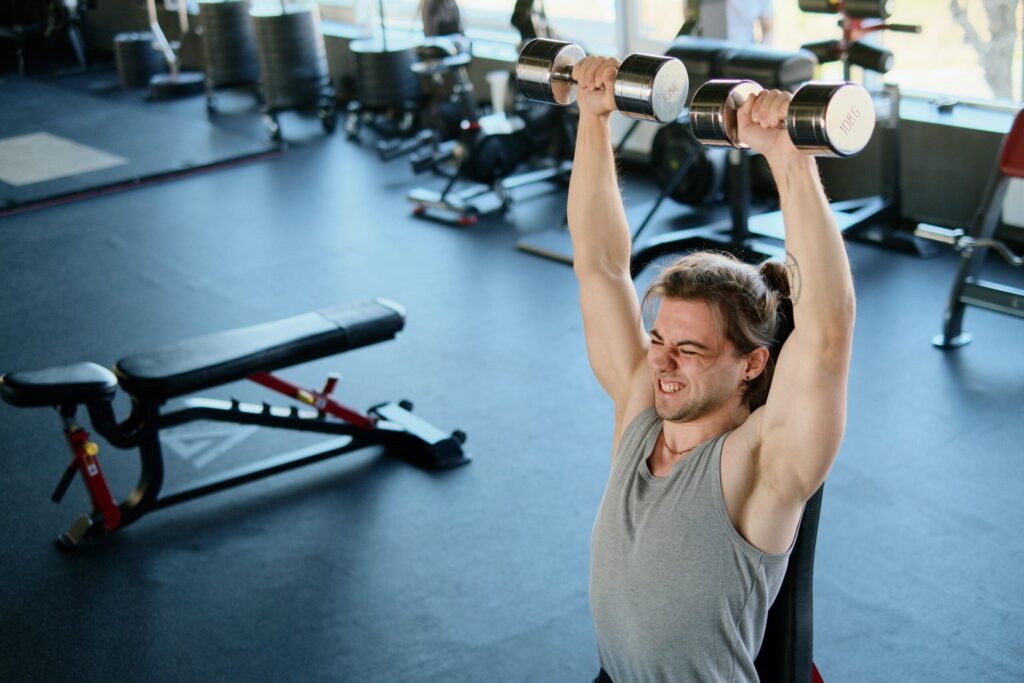
Most lifters reach for presses, rows, or curls when they grab a dumbbell. The snatch almost never makes the list – but it should. Overshadowed by the barbell Olympic lifts, the dumbbell version often gets dismissed as a flashy conditioning move. In truth, it’s one of the best ways to train explosive power, overhead stability, and full-body coordination with just a single weight.
Unlike isolation lifts, the dumbbell snatch takes a load from the floor to overhead in one smooth motion. Every rep forces your legs, hips, core, shoulders, and grip to work together. For athletes, it builds the kind of speed and force transfer that carries into sprinting, jumping, and sport performance. For anyone chasing muscle and conditioning, it’s a demanding blend of strength and cardio in one movement.
The best part? You don’t need much space or weight. Even a light dumbbell can push you to the limit if you move with intent and control. This lift rewards precision and timing more than brute force.

Why the Dumbbell Snatch Works
If you only have one dumbbell and a patch of floor, the snatch is a difference-maker. It starts with an explosive leg drive, transfers power through the hips, and finishes in a solid overhead lockout. In one movement you hit your legs, glutes, core, shoulders, and back.
Coaches often program the dumbbell snatch because it teaches triple extension — driving through the ankles, knees, and hips. That pattern carries over directly to sprinting, jumping, and any sport that demands power.
It’s also a conditioning tool. Because the lift recruits so many muscles and moves quickly, your heart rate spikes in seconds, making it as effective for fitness as it is for strength.
How to Do the Dumbbell Snatch
Step-by-step:
- Stand with feet shoulder-width apart, dumbbell on the floor between your feet.
- Hinge at the hips and grip the dumbbell with one hand.
- Drive through your legs and hips in one explosive motion, pulling the dumbbell upward.
- As it passes chest level, rotate your elbow under and punch the dumbbell overhead.
- Lock out the elbow, then lower the dumbbell safely back down.
- Repeat on the other side.
Start light and focus on speed through the hips. Keep the dumbbell close and let your legs and hips drive the lift, not your arm.
Benefits of the Dumbbell Snatch
- Full-Body Strength: One exercise, nearly every major muscle group.
- Explosive Power: Builds hip drive, crucial for athletes and lifters.
- Conditioning: Spikes your heart rate, doubles as cardio.
- Core Stability: Demands balance and trunk control.
- Accessibility: One dumbbell, minimal space.
Studies on explosive lifts like the snatch show big improvements in rate of force development and power output — two key markers of athletic performance.

Common Mistakes to Avoid
- Going too heavy: Start light until your form is locked in.
- Pulling with the arm: The snatch is powered by the hips.
- Letting the dumbbell drift away: Keep it close to your body.
- Soft lockout: Punch the dumbbell overhead and lock the elbow.
A simple cue: jump, pull, punch. Drive with the legs, pull close, and finish strong overhead.
How to Program It
- Strength Focus: 3–4 sets of 6–8 reps per side, resting 90 seconds.
- Conditioning: 4–5 rounds of 30–45 seconds per side, resting as needed.
- Finishers: 2–3 sets at the end of a workout for a strength-cardio hybrid.
The Bottom Line
Many lifters overlook the dumbbell snatch, but that’s a mistake. It delivers strength, power, and conditioning in one efficient movement. Whether you’re training at home or in the gym, this underrated exercise deserves a spot in your workout program.
References
Sandau, I., Chaabene, H., & Granacher, U. (2021). Predictive Validity of the Snatch Pull Force-Velocity Profile for 1-Rep Max Snatch. Sports. Link
Morris, S.J. (2022). Comparison of Weightlifting and Plyometric Training on Strength, Speed, and Power. Journal of Functional Morphology and Kinesiology. Link