This article is intended to present an unbiased viewpoint. BOXROX does not condone the use of drugs.
Most people first heard of Kelli Holm when CrossFit® announced the failed drug tests from the 2018 CrossFit Games®. Before that fateful day on November 8, 2018, Kelli had just been another Games athlete, someone without a big following, an athlete not many people knew about.
That day however, Kelli Holm became known as a cheater.
Her name stood out at the top of CrossFit’s list of athletes in breach of the company’s Drug Policy. The fourth Fittest Woman in the 35-39 Masters division was found to have metabolites of GW1516 in her system. The news hit headlines across all CrossFit® media outlets.
When she responded to the announcement, she said what many athletes have when their drug test results come back positive. Namely, Kelli claimed innocence.
Like many before her, Kelli blamed a contaminated supplement for the result of her test.

But she proved it. An unusual asterisk next to the result of her sanction stood out on CrossFit’s announcement. In small letters right under the names of the two Games athletes banned from competition, a short sentence explained that Kelli’s sanction had been reduced to two years following the appeals process.
The length of a sanction – which is imposed at CrossFit’s sole discretion, if at all – is determined by CrossFit® based on the circumstances present in each case. Kelli was one of the first athletes to successfully prove a supplement she took was indeed contaminated during the appeals process.
Yet this provided little solace to Kelli. A reduced sanction was not going to restore her name – in the CrossFit® community she would be recognised as one of the cheaters.
Her integrity was called into question, with the only opportunity for the truth to surface if people took the time to inspect why her sanction was reduced.
Kelli made her second CrossFit Games® in 2018 after a big year of training. A mother of three at the time, she tried her best to balance and mix training and family as much as she could, in a way that was healthy for her family.
She had started CrossFit® a few years prior, having competed in gymnastics and track and field through high school and been a keen marathon runner in her twenties.
CrossFit’s essence appealed to her insatiable nature; there were countless exercises to get better at. Improving in an area was really encouraging, but glaring weaknesses that couldn’t be ignored also kept her motivated to work harder.
“You’ve never arrived, you’re never good enough because, with so many movements, you can always be better at something,” Kelli told BOXROX. “Working hard and seeing improvements and progress is really motivating for me, and CrossFit provides the perfect environment for that.”
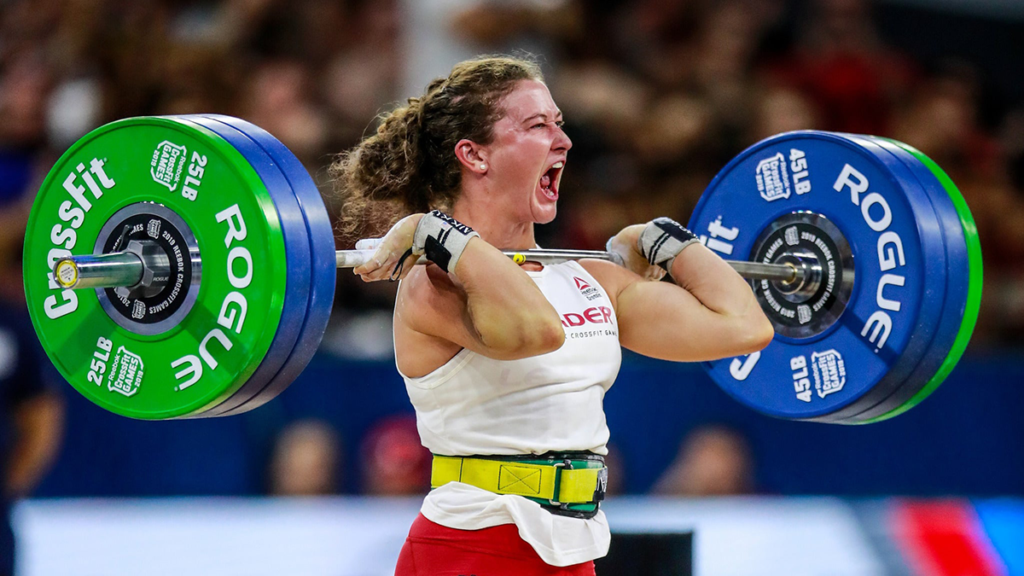
She worked hard and improved quickly. In 2017, a few years after taking up CrossFit® for the first time and just nine months after the birth of her third child, Kelli qualified for the CrossFit Games® as a Masters athlete.
While Kelli loved competition and the thought of making Regionals was incredibly alluring, in her head she was now old, inexperienced and still nursing a baby – realistically, those dreams were behind her.
Kelli feared saying Regionals were her goal that year because it felt like a pipedream. Yet she trained as if it were her aim.
The 2017 CrossFit® season marked the introduction of the 35-39 Masters Division. Oblivious to this, Kelli took part in the 2017 CrossFit Open® and only focused on her placement within the Central Region as she tackled every workout.
Her performance would ensure her a place in the Age Group Online Qualifier (AGOQ) and, ultimately, she would secure a spot at the 2017 CrossFit Games®.
The 2017 CrossFit Games® were Kelli’s first individual competition of her career and her experience was full of rookie mistakes, Kelli recounts. As an athlete she had much to learn; she realised there were big gaps in her fitness and her mental game needed improving. There were many moments where she doubted she belonged with the other women competing.
Yet the experience grew her desire to do things differently and do them better. She wanted another shot at it.
And she got it. Taking everything she learned, she spent the following year finetuning her training, nutrition and recovery. She participated in other competitions to gain more experience, qualified for the 2018 Central Regional and finished fourth in the AGOQ.
It all payed off: Kelli placed fourth in the Masters 35-39 age division at the 2018 CrossFit Games® behind Anna Tobias, Samantha Briggs, and Helena Falk.

A month later she would receive an email informing her she had failed the in-competition drug test, and given a contact and deadline if she wished to appeal the findings.
The process that followed was long and arduous, resulting in a ban from competition. But that wasn’t the most challenging part of this ordeal in Kelli’s life.
“It doesn’t matter what the ban is, the time feels arbitrary. Just being associated with a positive drug test is the struggle,” Kelli said. “Not being able to compete is sad but really isn’t the biggest deal – it’s everything else that comes with it.”
Wider implications
She fought her case. As soon as she received the notification from CrossFit®, Kelli discussed everything with her coach and her husband. She spent the weekend researching – before the email, GW1516 were just a bunch of random letters and numbers clumped together – read through the entire rulebook and hired a lawyer.
“It was horrifying,” Kelli paused, looking for words to accurately describe what it was like, reading that email for the first time. “I didn’t really understand. There were so many questions. My mind was racing, it didn’t make sense – how could it be possible?”
The first thing that crossed her mind was that the notification was accidentally sent to the wrong person. Then, that the tests got mixed up. She thought of all the implausible ways this could be a mistake. She questioned whether she’d been spiked.
“The reality of it took a lot of time to settle in,” Kelli said. “The idea of having a competition ban and the potential of that was sad, but I kept getting these waves of the implications of this on my reputation, and how people could potentially view my integrity.”
The magnitude of the results was so overwhelming, Kelli struggled to process it. And at this stage she didn’t know where the drugs had come from.
“At that point, the idea of a contaminated supplement seemed to me just as implausible as someone spiking my drink,” Kelli said.
Moving forward from this accusation is still the hardest part for Kelli. She’s had to figure out how to deal and live with it.
“I knew my family didn’t care much about my CrossFit accomplishments; nobody does. I wasn’t sponsored, I wasn’t putting food on my table, no one cared if I went to the CrossFit Games or not. I did it because I loved it and because it was fun and because I like to challenge myself,” Kelli said.
“There wasn’t any external pressure on myself to perform to a certain standard. Ultimately, the loss of competition paled in comparison to the stain on my reputation. Having my integrity and values questioned, that was the hardest to swallow. And even going forward it still is.”
She knows people have a certain amount of respect for someone who owns up to a positive test.
Through her life she’d embodied that; she was quick to apologise, she owned up to her mistakes. But this time she couldn’t.
“I remember feeling like it could have potentially been easier if I could own up to it and move on,” she recounts.
Especially before she knew where the banned substance had come from.
“But I certainly wasn’t going to, because I didn’t do anything intentionally,” Kelli said.
“People hate the pleading innocence. There’s a group of people who want to believe that it’s impossible to be great without cheating; there’s a group of people who think it’s so unlikely or implausible that you’d have a contaminated supplement – ‘it never happens in real life’ – and prior to this I was part of that group, the story is really hard to believe,” Kelli said.

Within 48 hours of being notified of her failed drug test, she sent a letter to her family, close friends, and training partners, informing them of her situation. She wanted to be transparent and take control where she could, considering the circumstances. Below is an excerpt from the letter:
“[…] These last few days have been filled with confusion, tears, and a search for answers. We’ve contacted a lawyer and are looking into what options I might have. In particular, we are going to test some of the routine supplements that I use to evaluate for any contamination. I informed Crossfit of my intent to appeal, but unless I can determine a source, I don’t believe I have much grounds to win an appeal. For now I assume the standard penalty will be in affect: a 4-year ban from all Crossfit sanctioned events. I do not yet know the timeline for when this will be made public but I’m anticipating within the next few weeks.
“[…] I want to apologize to you all for this entire situation. Not because I’ve done anything wrong, but because the way in which my reputation is now tarnished will most certainly reflect on you as well. And to those of you with your own Crossfit communities – I want to extend an apology specifically and especially to you. Crossfit will be making this news public soon, and all of your communities will surely know. And, like most of us would, they will assume that a failed test implies certain guilt. My heart is heavy as I think about the position this this puts you in, of having to explain or defend me to your peers, and of enduring their justifiable disappointment or skepticism. The community of Crossfit is something that I love and treasure SO MUCH, and bringing any amount of shame on my family and community is weighing heavily on me. […]”
Involuntary doping
Proving that you’ve taken a contaminated supplement is extremely difficult. First off, the process of independently testing supplements is expensive. While the price depends on the lab and the client’s specific requirements, testing a single supplement usually costs upwards of $500.
Besides, the likelihood of an athlete still having the old tubs of every supplement they’ve consumed months after a drug test is slim.
Add to that legal fees, and successfully appealing a positive drug test can become not only overwhelming but near impossible, especially for athletes who don’t earn much from the sport itself.
Kelli is one of the few athletes who have proven to be victims of a contaminated supplement. Before receiving the lab results, Kelli had had a good six weeks to come to terms with the fact she might never find out why.
When she got the notification that the substance she’d been banned for had been found in a pre-workout she had sent for testing, it was a huge relief.

Following her lawyer’s advice, Kelli had sent a few supplements at a time to a lab for testing. The first group came back clean but the second group, almost two months after CrossFit’s initial email, contained her answer.
“It felt really validating to have the knowledge just for myself – whether or not it impacted my sanction. Just to have an answer of how this happened and where it came from, and to not spend the rest of my life wondering,” said Kelli.
“Of course it’s unfair and of course there’s a lot of inner frustration, but there was relief in knowing where it came from,” she said. She knew she hadn’t intentionally doped from the beginning, and now she could prove it.
There are strong feelings around positive drug tests, and contaminated supplements are no exception. Ultimately, doping is doping, whether it was intentional or not. But not everything is black and white; athletes in the past have had sanctions reduced or even revoked (following the World Anti-Doping Code) where “no significant fault or negligence” is established.
The U.S. Anti-Doping Agency recognises that supplements are contaminated intentionally or by accident and several studies [1, 2, 3] have been published on the topic.
“Athletes will continue to be at risk for adverse events and failed doping tests due to contaminated dietary supplements until legislation changes how they are regulated,” concluded a 2018 study on prohibited substances in dietary supplements.
“The principle of strict liability that applies in sport means that innocent ingestion of prohibited substances is not an acceptable excuse, and athletes testing positive are liable to penalties.
“Although it is undoubtedly the case that some athletes are guilty of deliberate cheating, some positive tests are likely to be the result of inadvertent ingestion of prohibited substances present in otherwise innocuous dietary supplements,” another study established.
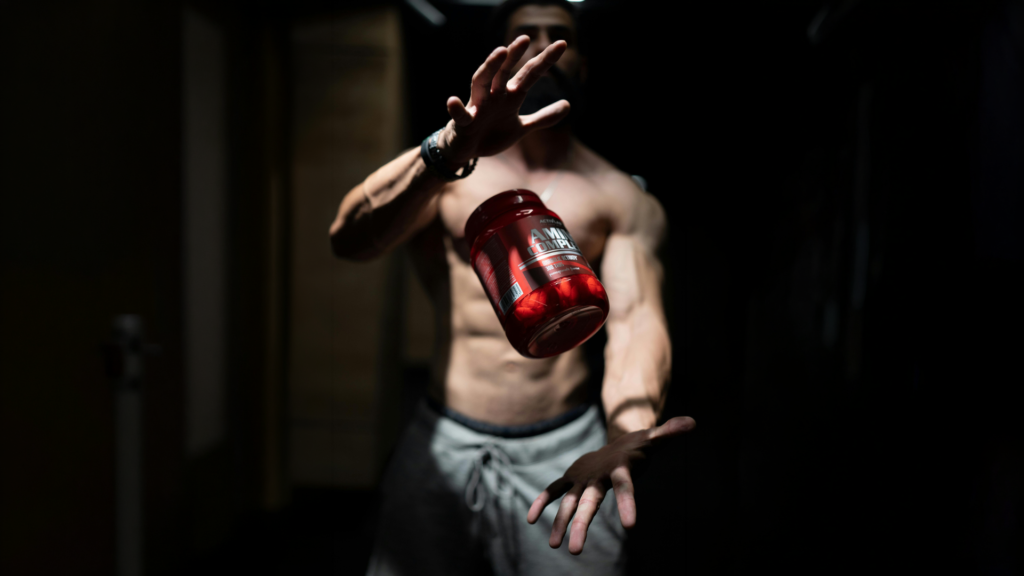
The substance found in Kelli’s pre-workout was GW1516, also known as Endurobol or Cardarine. It was a development drug removed from research when it was found to rapidly develop several types of cancer in mice and rats.
As a PPARd, it upregulates the expression of proteins that help metabolism, proteins which subsequently aid with energy expenditure and thus improve endurance.

Pre-workout was not a supplement Kelli used regularly; it was something she limited to competition as a way of maximizing the effect of the caffeine. Therefore, she knew the use of the contaminated canister was limited to one competition: the four days of the 2018 CrossFit Games®.
The test was administered right after the last event and, because it was the end of the competition, Kelli took big sips of her pre-workout to help her provide the urine sample.
The test results revealed 0.02ng/mL (0.000000002 grams per litre) of metabolites of GW1516 were detected in her sample.
Because research for the drug was stopped, it’s hard to establish how much of the substance a person would need to ingest for it to have an effect on performance. A toxicologist told Kelli the amount found in her system couldn’t have given her any competitive advantage, the same way it couldn’t have affected her health.
Ultimately, there were performance enhancing drugs in Kelli’s system and CrossFit® operates a zero-tolerance policy. Clause 16 of the CrossFit Drug Testing Program states that “athletes are solely responsible for what they put on or into their bodies,” so she was banned.
What baffled Kelli the most was that she hadn’t been reckless with her choices of supplements and thought she was being careful with the supplements she took; all of them were well-known and reputable, and came at the advice of a sports nutritionist. Nearly all of them were third-party tested.
A few days before leaving for Madison, she bought a popular pre-workout powder to use during the Games.
Kelli thought her purchase was safe as the company has a big presence in CrossFit®, vending at various competitions and even sponsoring Games athletes.
But the product she purchased was not third-party tested. She later learned that a separate version of this same supplement exists which is intended for competing athletes and is third-party tested.
“Now I know that, and I didn’t at the time,” Kelli said. “That was my mistake, and I take ownership of that.”
Ongoing struggles
Kelli knows she didn’t do anything intentionally, but she still hates that this happened. Not many understand just how devastating a positive drug test feels when there was no intent to cheat or gain an advantage, and not many know what athletes go through after they’ve been red flagged.
“I felt like all I had accomplished was undermined by that test, and that’s so disheartening; to feel like the work you’ve put in is discounted, and people call into question all you’ve invested,” Kelli said.
“It immediately devalues it and undermines that. To have something that’s totally out of my control shatter my image and misrepresent my standards and reputation for honesty and hard work; to have something at least taint it considerably was just heart-breaking. It all felt so out of my control,” she continued.
“I’m small potatoes in the world of CrossFit,” Kelli explained. “People don’t necessarily care what the story is and they’re not likely going to take the time to look into my situation in particular. I know I generally get lumped in with everybody else that’s ever failed a test – we’re all dirty cheaters.”
Accepting that a failed drug test is now attached to her name forever has been the most devastating part.
“Nothing gets better when the ban is over. That doesn’t make it any better,” said Kelli. Theoretically, she’s allowed to compete again this upcoming season. “Nothing goes back to normal. Nothing is restored,” she explained.
Ultimately, it almost doesn’t matter if the ban is six months or four years. It’s the other repercussions that don’t go away, that don’t expire after two years, that are far harder to deal with.
It’s clear to me Kelli hasn’t gotten over the accusation. CrossFit® is still part of her life and, while she is happy to be where she is, I can tell she doesn’t like this to be a part of her reality.
Yet she also highlights the good: Kelli’s thankful for the support system she has and for the fact that she found an answer.
Regarding her life and goals for the future, things haven’t changed much: “I still have the same expectations for myself and hold myself to a high standard,” Kelli said. “I want to train as much as I can in a way that’s healthy and balanced for my family.
“And if that allows me to be successful and competitive again in CrossFit, I would love that, but I’m okay if it doesn’t.
“I’ve chosen to have a house full of kids and for that to be my main focus. I know they need me here and need me to be present, and I’m okay with that.
“I still love the sport of CrossFit and my community. I respect CrossFit’s zero tolerance policy and their need to maintain the integrity of the sport. This entire situation has been so unfortunate; however, I do not hold any bitterness toward CrossFit.”
Kelli’s struggle, as well as the issue of contaminated supplements, is real and ongoing, and often athletes who fall victim to it have very little recourse. It’s an injustice that remains for now.
While Kelli has come to terms with that, she is grateful to everyone who takes time to understand her story. She’s not alone.
image sources
- Drugs in CrossFit contaminated supplement: Illustration by Jess Timmiss