
































Which Order Should Your Exercises Be in a Workout?
Discover the science behind exercise order and its impact on your workout results. Learn how to optimize strength and muscle growth with expert insights.

BOXROX may earn a commission if you buy through links on this page.

When structuring your workout, the order in which you perform exercises can significantly impact your results. The latest research reveals important insights into how exercise order affects strength gains and hypertrophy.
Understanding the optimal sequence of exercises in a workout is crucial for maximizing strength and muscle growth. Dr Milo Wolf and his team at Stronger By Science delve into the scientific basis for exercise order, exploring how fatigue, specificity, and exercise type play roles in influencing your gains.
Dr Milo Wolf shares his invaluable knowledge on a YouTube channel ranging from hypertrophy and strength training to losing fat, although the information for this article is based on a video he presents uploaded on the Stronger By Science YouTube channel.

By examining various studies, including a metanalysis by Nunes and colleagues, and additional research from Brandão and Cunha, it is possible to establish evidence-based guidelines for organizing your training sessions.
The list of scientific research taken into consideration to find out which order should your exercises be in a workout are listed at the bottom of this page.
Which Order Should Your Exercises Be in a Workout?
Why Exercise Order Matters
As you progress through your workout, fatigue accumulates, affecting the quality of your subsequent sets and exercises. This is particularly important because the highest quality work you perform is at the beginning of your session when you are least fatigued. Therefore, the exercises you prioritize will benefit the most from your peak strength and energy levels.
Key Findings:
- Fatigue Management: The more you train, the more fatigued you become, which can impact your ability to lift heavy weights and maintain proper form.
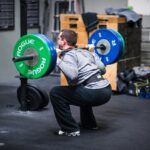
- Specificity Principle: Training the exercises that are most important to your goals at the beginning of your session yields the greatest strength gains. For example, if improving your squat is a priority, starting with squats ensures that you can lift the heaviest weights with the best form.
- Exercise Type: Compound movements, which involve multiple joints and large muscle groups, should typically be performed first to maximize their benefits.
“Whatever you train first with an obsession will be the highest quality work you do,” Wolf explains.
The Evidence from Research
Strength Gains
The metanalysis by Nunes and colleagues found that strength gains are significantly influenced by the order of exercises. The exercises performed at the beginning of a workout session showed the greatest improvements in strength, with effect sizes ranging from small to moderate (0.3 to 0.6). This suggests a clear advantage to prioritizing key strength exercises early in your workout.

Additional Studies:
- Metanalysis by Swinton and colleagues: Examined nearly 300 studies and concluded that lifting heavier weights results in better strength gains. This reinforces the idea of performing strength-focused exercises first when you are freshest.
- Study by Brandão and colleagues (2020): Compared the effects of starting with bench press versus skull crusher on strength and hypertrophy. The results indicated that starting with compound movements like bench press led to better overall strength gains.
“Although differences were minimal, if there were any, they were in favour of the group that started with bench press first followed by the skull crusher.”
Hypertrophy
The impact of exercise order on hypertrophy is less clear. Nunes’ metanalysis found no significant effect of exercise order on muscle growth. However, other studies suggest minimal benefits from starting with compound movements for hypertrophy.
Notable Findings:
- Study by Brandão and colleagues: While strength gains were slightly better when starting with compound movements, hypertrophy differences were minimal and not as significant.
- Study by Cunha and colleagues: Featured a crossover design and found no meaningful differences in hypertrophy or strength gains based on exercise order, especially in older, untrained women. This suggests that exercise order may be less critical for hypertrophy compared to strength.
Practical Recommendations
Based on the research, here are some practical guidelines for structuring your workouts:
- Prioritize Compound Movements: Start your session with multi-joint exercises like squats, deadlifts, and bench presses. These exercises engage the most muscle mass and are crucial for overall strength development.
- Sequence Similar Exercises Together: Group exercises that use similar equipment or target the same muscle groups to save time and maintain intensity. For example, follow a dumbbell press with a dumbbell row.
- Train Your Weaknesses First: If you have specific strength goals or weaker muscle groups, address these at the beginning of your workout to ensure they receive your maximum effort.
- Consider Practical Constraints: In a busy gym, equipment availability might dictate exercise order. Adapt as needed but try to maintain the overall structure of prioritizing compound movements.

The order of exercises in your workout can significantly influence your strength gains and, to a lesser extent, hypertrophy. By prioritizing compound movements and the exercises most important to your goals early in your session, you can maximize your training efficiency and effectiveness. While the exact impact on hypertrophy is less pronounced, maintaining a structured approach to exercise order ensures that you can lift the heaviest weights with the best form, ultimately supporting your overall fitness progress.
Scientific literature:
Dose-response modelling of resistance exercise across outcome domains in strength and conditioning
Time Course of Recovery From Resistance Exercise With Different Set Configurations
You Might Find This Interesting As Well: This Is Better Than Sets and Reps for Muscle Growth
Why does the order of exercises in a workout matter?
What is the specificity principle in exercise order?
How does exercise order affect strength gains?
Does exercise order impact hypertrophy (muscle growth)?
What are compound movements, and why should they be performed first?
What are practical recommendations for structuring a workout?
Sequence Similar Exercises Together: Group exercises that use similar equipment or target the same muscle groups to save time and maintain intensity.
Train Your Weaknesses First: Address specific strength goals or weaker muscle groups at the beginning of your workout to ensure they receive your maximum effort.
Adapt to Equipment Availability: In a busy gym, equipment availability might dictate exercise order. Adapt as needed but try to maintain the overall structure of prioritizing compound movements.
What does the research say about starting with isolation movements versus compound movements?
How should women approach exercise order for optimal results?
Should I change my exercise order if I’m training for hypertrophy?
How can I maximize my workout efficiency in a busy gym?
Robert Born
Journalist obsessed with sports and competitions. Ready to try out anything new, even that up-and-coming diet.
More from Robert Born